
100 Hacks to Get Ripped While Working 60+ Hour Weeks
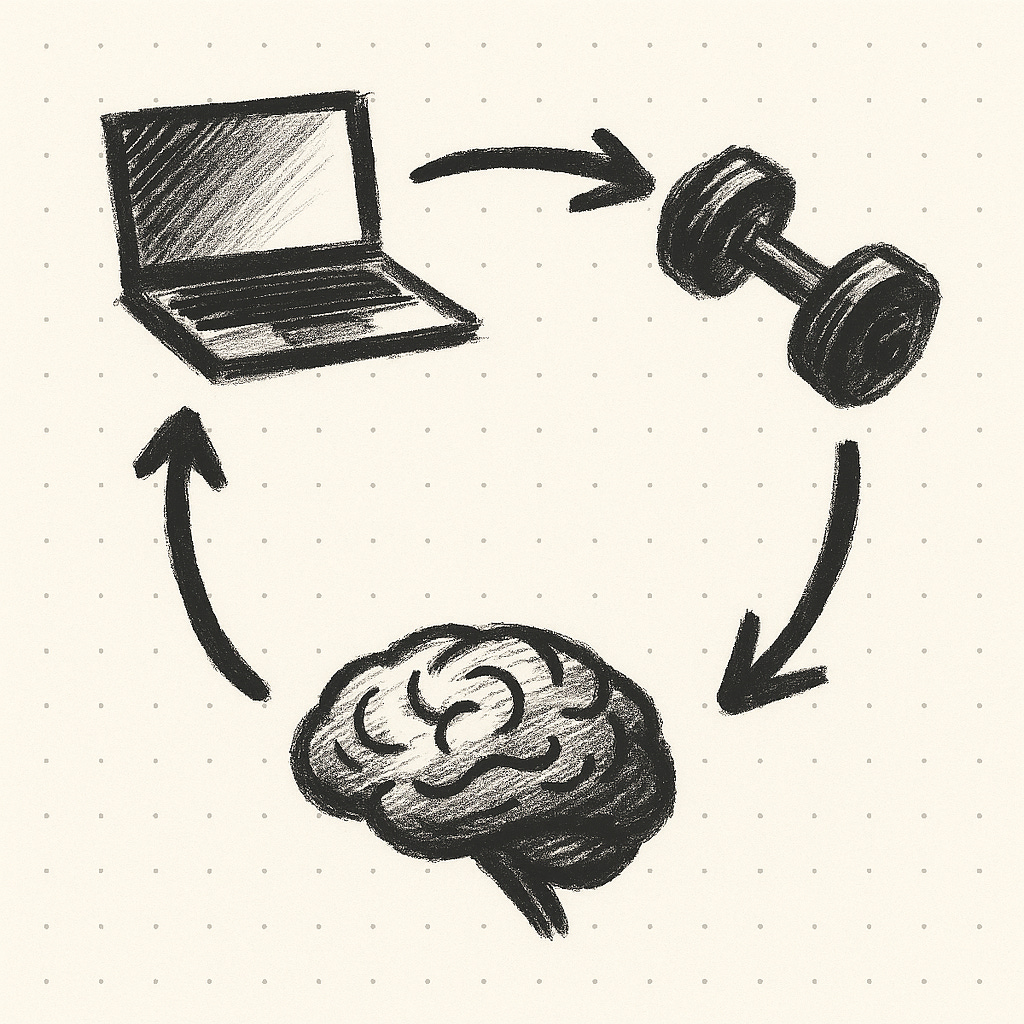
Generating energy

This is for people who
1. Work at a desk a lot
2. Want to level up their careers AND fitness simultaneously
This isn’t about reaching 5% body fat, making the Olympics, or going viral on IG for your abs. It’s also not about putting your health on hold until you’re a millionaire. It’s about achieving excellence on multiple dimensions and refusing to believe that you need to do one before the other.
Achieving abnormal success and fitness in parallel is possible.
Here are some examples.
- Alex Hormozi (36). Got increasingly fit and rich throughout his entrepreneurial career.
- NFL coach Dan Campbell (49). Got fit during his playing days and maintained it after retirement, despite having a less active job. Reppin’ burpees faster than his players.
- Jack Dorsey (48). Was lean during the early Twitter days and has only gotten better at optimizing his fitness and productivity.
- Jesse Itzler (57). Has been running ultramarathons and maintaining “the energy of a teenager“ for the last 33 years.
- Joe Rogan (58). Got ripped as a young kickboxer and never looked back.
- Leilah Hormozi (33). Started overweight and broke, turned both around together.
At 32, I’ve finally figured this out, too. I was fluffy and average. Now I’m in great shape (shirtless mirror pic) and am producing a high volume of quality work.
Here is my homework.
Scouting Report
There’s a basketball game happening in your head every day: Team Change vs Team Stasis. Instead of competing for control of the ball, they’re competing for control of your decisions.
Basketball is the most accurate analogy because:
- Only one team can have the ball at a time
- There is a high number of possessions per game (~200)
- Some scores are more significant than others (3-pointer vs free throw)
- Teams can have very different offensive and defensive strategies
Things fall apart when you consider the shot clock and fouls, so forget about those.
Team Stasis
This team wins each day that your productivity and fitness remain unchanged.
Offensive strategy: prioritize momentary pleasure
Cheap dopamine is to Team Stasis what the 3-pointer was to the 2010s Golden State Warriors (everything). They’ll convince you that you need a sugary latte in the morning, a 500-calorie dessert with your coworkers, and a two-hour brain-rot session before bed. The stronger the reliance on these short-term pleasures, the longer they stay in possession of your decisions.
Remember: Stasis doesn’t need to make you fat and unproductive. They only need to dampen your progress enough so that nothing changes. That’s why they focus on feelings and daily habits.
Defensive strategy: avoid stimulus and objectivity.
When Change is in control, Stasis will rely on subtle deception to minimize stimulus.
When you’re lifting, they’ll tempt you stop the set before you reach failure. When you’re eating clean, they’ll make you believe that you don’t need to consider portions. When you have an ache in your knee, they’ll pressure you to take a full rest day instead of doing pull-ups. When you’re in the flow state, they’ll guilt you into checking Slack.
They’ll downplay the value of objective fitness metrics such as pictures, body-fat %, lifting numbers, steps, calories, and the scale.
They’ll do the same for productivity metrics: PR velocity, revenue, conversions, and your net worth.
The sooner they can make you discredit objectivity (numbers), the sooner they can get back on offense (feelings).
Team Change
Change wins when your productivity and fitness complement each other.
Offensive strategy: Generate energy and focus
Establish habits that create energy and then deploy that energy into your fitness and work.
- Workout and eat in a way that improves your ability to focus
- Work so that you’re excited to work out
- Do it in a way that is sustainable for a lifetime
Defensive strategy: Minimize extremes
Meaningfully improving your fitness and productivity requires habits, which require time. Change must defend against an extreme departure from the new habits while they are still being formed.
Specifically, they are trying to prevent you from
- Taking weeks off from your work instead of days
- A diet that bloats you during work hours
- Consecutive days of excess calories
- Getting injured
- Staying injured
- Burning out
They do this by permitting concessions and having boundaries.
A sane basketball team will allow you to score an open layup without fouling to avoid a 3-point play. They will call a timeout to stop their opponent’s hot streak. They won’t attempt to steal the ball every play to avoid foul trouble.
A sane lifestyle permits rest and pleasure, such as dessert or scrolling. But it also has guidelines to prevent these occasional concessions from evolving into daily habits.
Minimize extremes — that’s how Team Change stays in the game.
Playbook
Now that we understand the game and each team’s strategy, here are the “hacks” — the specific plays that I run to win.
Diet
How to use calorie intake, energy, digestion, and hunger to stimulate progress
Diet Offense
1. Track your calories and macros using an app (MacroFactor)
2. Use a scale when tracking calories — not measuring cups
3. Eat low-calorie condiments: light cream cheese, mustard, hot sauce, yogurt, peanut butter powder, pickles, relish, low sugar BBQ
4. Make it taste like a hot dog: add ketchup, pickles, mustard, relish, and light cheese
5. Make it taste like dessert: add cinnamon, vanilla, and cocoa
6. Make it crispy: air-fry, pan-fry, or bake
7. Neutralize cravings proactively by eating a portioned indulgence before your workout
8. Eat probiotics: sauerkraut, Greek yogurt, kimchi, vinegar
9. Outsource meal prep: subscribe to meal replacement companies, hire an assistant
10. Eat single-ingredient foods
11. Use the Bobby Approved app if unsure of ingredient quality
12. Consume caffeine to reduce hunger
13. Eat in a short window (4-12 hours)
14. Fast periodically (12-36 hours)
15. Eat standing up
16. Master four healthy meals that you love and could enjoy eating forever
17. Make healthy friends
Diet Defense
1. Don’t diet so hard that you can’t focus
2. Don’t diet for shorter than 8 weeks or for longer than 12 weeks without a maintenance break
3. Decrease the calorie deficit when you start fantasizing about food all day
4. Don’t drink alcohol
5. Don’t eat processed food
6. Don’t overeat carbs if you’re gonna be sitting down
7. No consecutive cheat meals/days
8. Have a small indulgence each day, and time it to maximize the dopamine
9. Take caffeine breaks to prevent dependence and tolerance
10. Drink bone broth or herbal tea in the afternoon instead of caffeine
11. Eat low-calorie soup and smoothies to simulate fullness
12. Reserve some fats for when you’re likely to have cravings (mid-day)
13. Eat slow-digesting carbs/fats/casein during the last meal to prevent nighttime hunger
14. Reserve a large amount of carbs for before and after your workout
15. Drink carbonated water with ice and electrolyte mix in a fancy wine glass to stave off hunger
16. Pack protein powder and a shaker when traveling
17. Eat low-calorie veggies that take a long time to chew (carrots, cabbage, cucumber)
18. Use small bowls and spoons to maximize the number of scoops
19. Brush and floss after hitting your daily calorie limits
20. Stock a ‘healthy’ dessert to neutralize a crash out (eg, Halo Top ice cream)
21. Keep frozen pre-portioned proteins and veggies ready for when you’re too busy or tired to cook
22. Start every meal with protein to increase satiation and reduce the urge to overeat carbs
23. Decide what you’ll order before you arrive at the restaurant to prevent impulse picks
Mind
How to use clarity, willpower, mood, and purpose to stimulate progress
Mental Offense
1. Take pictures and videos to track your progress
2. Do deep work while fasting
3. Sleep enough
4. Have an AFK wind-down routine (shower, journal)
5. Don’t schedule meetings in the morning (so you can sleep in if you stayed up later than usual)
6. Relax the time blocking and focus more on outcomes (ie, finishing the 3 most important tasks)
7. Get 10 minutes of direct sunlight within an hour of waking to regulate circadian rhythm and improve sleep quality
8. Group administrative work, deep work, and meetings to reduce context-switching fatigue
9. Check the scoreboard: Track your life satisfaction every week (0-100)
Mental Defense
1. Don’t work so hard that you can’t exercise
2. Don’t drink lots of water before bed
3. Look at old pictures from your unhealthy era
4. Reserve your favorite playlist for the afternoon slump
5. Take a power nap if you didn’t sleep well (buffer lack of willpower)
6. If you slept poorly, focus on steps and mobility instead of lifting heavy
7. Take breaks at natural stopping points
8. Don’t check messages or emails during workouts
9. Walk around the block before and after work to mimic commuting
Body
How to use mobility, posture, and caloric expenditure to stimulate progress
Body Offense
1. Walk or stand for 5-15 minutes after eating lots of carbs
2. Get a minimum of 7,000 steps/day
3. Get an average of 10,000 steps/day
4. Don’t go over 15,000 steps and lift heavy on the same day without adjusting diet (cravings)
5. Track your goals and progress in a notes app or spreadsheet (not an app)
6. Lift using progressive overload
7. Sprint
8. Track your dedicated cardio and try to improve your speed or difficulty
9. Go on camera during the beginning of the meeting, then go off camera and walk with your laptop
10. Take calls while walking
11. Outsource your workout programming if you don’t enjoy doing it. Make sure the one you choose includes de-loading, though.
12. Do micro-exercises during wait times — push-ups, squats, or stretches
13. Mew
14. Breathe through your nose
Body Defense
1. Don’t exercise so hard that you can’t work
2. Don’t “earn your food” with workouts — the math doesn’t math
3. Don’t get all your steps at once (will lead to cravings)
4. Get more overhead mobility and upper-back strength (posture, injury prevention)
5. Film your hardest set to assess your form and intensity
6. Sit criss-cross applesauce
7. Get more ankle and hip mobility
8. Walk barefoot indoors to strengthen foot muscles and proprioception
9. Do single-leg and single-arm exercises to identify imbalances before they cause injury
10. Prop heels up when squatting if your ankles are tight
11. Stretch your ankles when ascending stairs
12. Wear zero-drop shoes
13. Clap hands behind back 100 times/day for shoulder durability
14. Stretch while watching TV
15. Hang from a pull-up bar throughout the day
16. Don’t squat in running shoes (wear flat shoes or go barefoot)
17. Use a standing mat to keep feet engaged and promote micro-movements
18. Periodically test your injury for tolerance — don’t wait until you’re 100% before continuing
19. If you’re really injured, spend the time you would’ve been exercising learning about health and exercise
20. Re-learn the basic movement patterns: run, squat, press, pull. (You’re probably doing something wrong.)
21. Strengthen your core and brace it during compound movements
Workstation
How to use ergonomics, vibes, and efficiency to stimulate progress
Workstation Offense
1. Prop feet up on yoga blocks to promote circulation (short king pro tip)
2. Sit on the edge of the chair to promote straight posture
3. Have a stretchy band at arm’s length for overhead stretching
4. Use a posture-reminder app (Mew)
5. Use a standing desk (bonus if it goes low enough for you to sit on the ground)
6. Use a chair with no arms and/or no back
7. Use an under-desk treadmill
8. Position the monitor at eye level to prevent hunching
9. Keep a water bottle on the side of your keyboard to force micro-breaks + posture shifts
Workstation Defense
1. Use website blockers and Pomodoro timers to prevent context switching
2. Use a blue-light blocking monitor
3. Use screen tracker (Rize) to assess actual work time
4. Unsubscribe from most newsletters
5. Don’t check your emails frequently
6. Let non-urgent messages and DMs build up and then respond in batches
7. Delete accounts on social media that aren’t necessary for work
8. Uninstall the remaining social media from your phone
----
The founder with a job offer wants you to let your health deteriorate until the IPO.
The fitness influencer with a workout program wants you to pause your career until you get a glistening 8-pack.
Nah.
Let’s start now.
Sure, it might take longer to achieve both together rather than obsessing over one.
But what’s the point of being wealthy if you can’t move your body well or look in the mirror with pride?
What’s the point of being jacked if you can’t balance other priorities?
You’re the head coach.
You can commit to a high standard of both fitness and productivity starting today.
Steal some of these plays, add your own, and soon enough, you’ll have a system where your health and your work elevate each other.
That’s what winning truly looks like.
----
LMK which plays are your favorites, and whether you have any good ones that I missed.
You might also like: